The existing surface
Removal, surface condition and preparation can change the scope before new tile is installed.
The planning guide
Useful questions and practical considerations for your tile project—whether you have a full design or are just exploring the possibilities.
A tile can look very different across a whole room. Consider its size, finish, variation and intended use alongside your lighting and nearby materials. A small sample is useful, but checking several pieces can give you a better sense of the overall effect.
Ceramic and porcelain describe broad material categories. The actual product specifications matter more than the label alone. Check whether the selected tile is suitable for the proposed floor, wall or wet-area application. A wall-only product should not be assumed suitable for a floor.
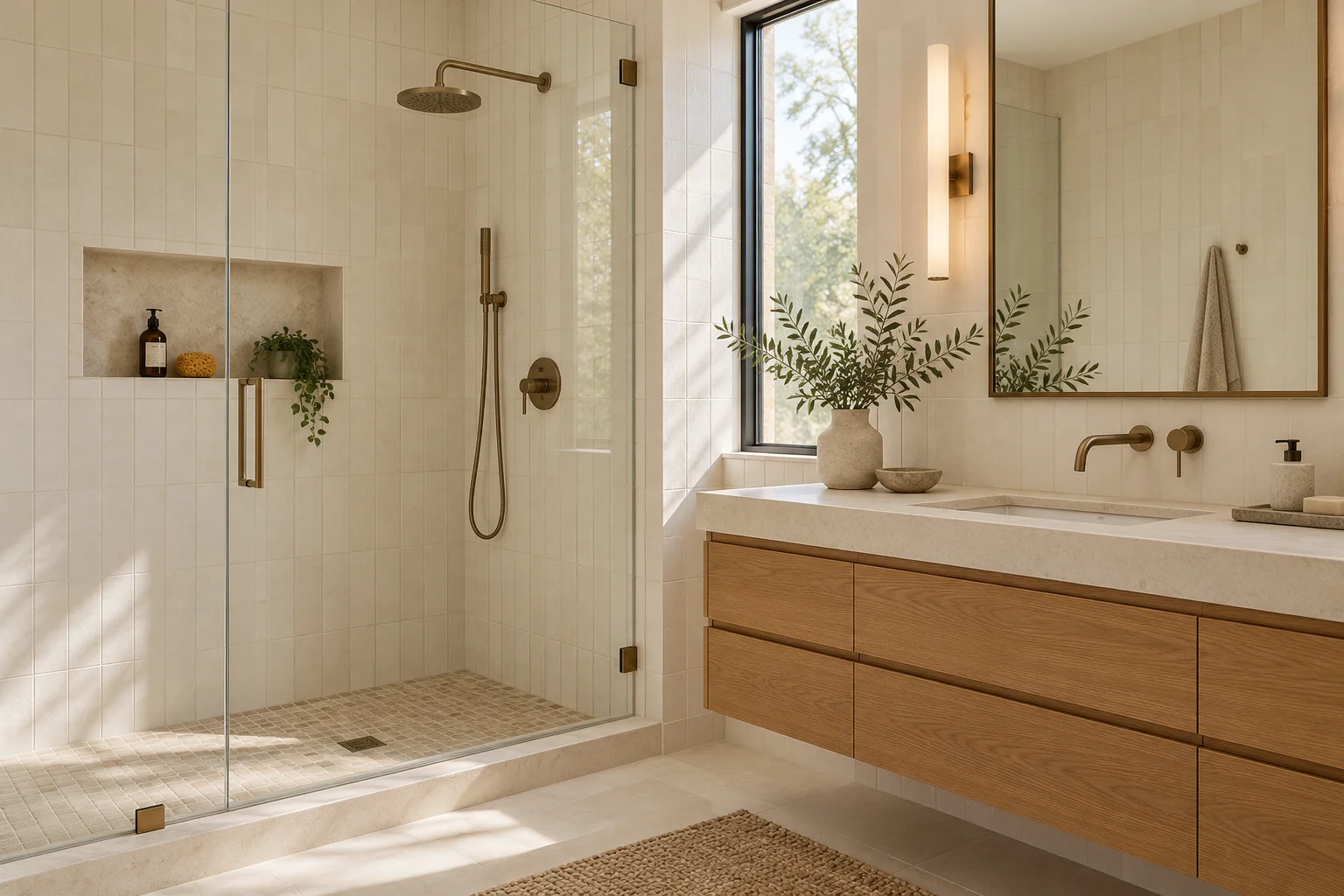
A calm palette can connect different tiled surfaces.
The visual decisions
Pattern, grout and edges change the way a finished surface reads. A grout color close to the tile can soften the grid; a contrasting color can emphasize each piece. Layout direction affects the visual flow of a long room or narrow wall.
Discuss where cuts will fall, how outside corners will finish and where tile meets another material. Product guidance and the installation system determine appropriate joints and other technical details; there is no single joint size that suits every project.
Planning an estimate
Removal, surface condition and preparation can change the scope before new tile is installed.
Format, handling requirements and detailed patterns affect the work involved.
Outlets, niches, thresholds, corners and fixtures introduce cuts and finishing decisions.
Room access, other work and product curing requirements influence project planning.
A useful estimate reflects the actual project rather than a generic price per square foot. Share any information you already have; you can fill in the details together as the conversation develops.
Frequently asked
Yes. Start with the room, surface and general idea. Approximate dimensions or a selected tile can be helpful later, but they are not required to submit the form.
That depends on the condition, stability and compatibility of the existing surface and the proposed installation system. It needs assessment; covering an unsuitable base does not solve the underlying problem.
No. A shower needs an appropriate water-management assembly beneath and around the tile. Waterproofing is a separate scope consideration, and responsibility for it must be confirmed before tile installation.
The scope, preparation, layout and materials affect timing. Curing intervals also matter. Discuss scheduling after the project requirements are understood rather than relying on a universal turnaround promise.
No. Requirements depend on the actual tile, grout and sealer system. Follow the manufacturers’ care guidance; sealing is not appropriate or necessary for every product.
You can ask about an assessment in your inquiry. Whether a visit can be arranged, and its terms, must be confirmed for your project.
Houston is our stated service area. If your project is elsewhere, include the city in your inquiry so availability can be confirmed before making plans.